| |
Pris: 2730 SEK exkl. moms  | 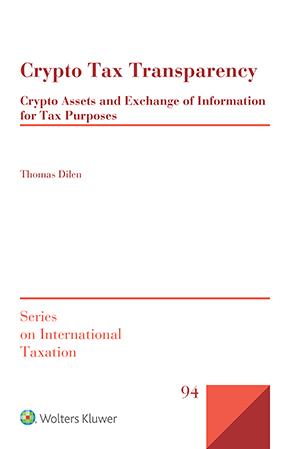 Crypto Tax Transparency: Crypto Assets and Exchange of Information for Tax Purposes is an important and timely study, which is the first to critically analyse whether the international standards for the exchange of information in tax matters are adequate to cover crypto assets and to cope with their inherent challenges. The breakthrough of crypto assets into the mainstream and their increasing entanglement with the real economy have led both loyal admirers and staunch sceptics to agree that cryptocurrencies are here to stay. However, the fact that crypto assets rely on blockchain technology poses entirely new challenges to tax compliance and transparency. Crypto Tax Transparency: Crypto Assets and Exchange of Information for Tax Purposes is an important and timely study, which is the first to critically analyse whether the international standards for the exchange of information in tax matters are adequate to cover crypto assets and to cope with their inherent challenges. The breakthrough of crypto assets into the mainstream and their increasing entanglement with the real economy have led both loyal admirers and staunch sceptics to agree that cryptocurrencies are here to stay. However, the fact that crypto assets rely on blockchain technology poses entirely new challenges to tax compliance and transparency.
What’s in this book:
In the course of the analysis, the author examines and clarifies various aspects related to crypto tax transparency, including:
- how the pseudonymity, decentralization, and lack of a clear situs of blockchains and crypto assets pose significant challenges to tax transparency;
- a taxonomy of crypto assets and their service providers;
- the substantial tax treatment of crypto assets and crypto-related activities in selected jurisdictions;
- the relevant inter- and supranational binding legal instruments and non-binding models on exchange of information in tax matters;
- what information on crypto assets should be subject to exchange of information procedures;
- treatment of crypto asset users’ rights as taxpayers involved in exchange of information procedures;
- whether the Global Forum’s standard of exchange of information on request (EOIR) is still able to cope with the new phenomenon of crypto assets;
- the roles of the OECD’s Crypto-Asset Reporting Framework (CARF) and the EU’s Directive on Administrative Cooperation (DAC) in enabling automatic exchange of information (AEOI) on crypto assets;
- potential role of the Foreign Account Tax Compliance Act (FATCA) and the US Treasury regulations governing broker reporting on digital assets.
With regard to the substantial tax treatment of crypto assets and the national procedures on exchange of information in tax matters, Switzerland, Belgium, and the United States have been chosen as representative national jurisdictions on the basis of their contrasting policies on crypto assets and their particular legal contexts.
How this will help you:
With its extensive treatment and thorough guidance on rules, principles, and procedures regarding exchange of information in tax matters at international, EU, and national levels – and how to apply them to crypto assets – this book will help practitioners and administrations to proceed confidently through the maze of rules that govern the international framework of exchange of information and to enhance tax compliance and proper reporting among both crypto asset users and crypto asset service providers.
Table Of Contents:
List of Abbreviations
Acknowledgements
PART I
Blockchain Technology, Crypto Assets and Direct Taxation
CHAPTER 1
Introduction
CHAPTER 2
Blockchains and Crypto Assets
CHAPTER 3
Crypto Assets’ Substantial Taxation and Enforcement
PART II
Crypto Assets and Exchange of Information on Request
CHAPTER 4
International EOIR Standard
CHAPTER 5
Crypto Assets under the International EOIR Standard
PART III
Crypto Assets and Automatic Exchange of Information
CHAPTER 6
International AEOI Standard for Crypto Assets
CHAPTER 7
Specific Aspects of AEOI on Crypto Assets in the United States
PART IV
Concluding Remarks
CHAPTER 8
Crypto Tax Transparency Beyond Exchange of Information?
CHAPTER 9
Conclusion
Bibliography
Table of Treaties
Table of Legislation
Table of Administrative and Executive Materials
Table of Cases
Index | | |
|
